Key Takeaways
- French Customs made the Enveloppe Logistique Obligatoire, or ELO, mandatory from 20 April 2026 for transport units using the Smart Border with the United Kingdom.
- The rule applies to RoRo traffic in both directions, including accompanied trucks and unaccompanied trailers.
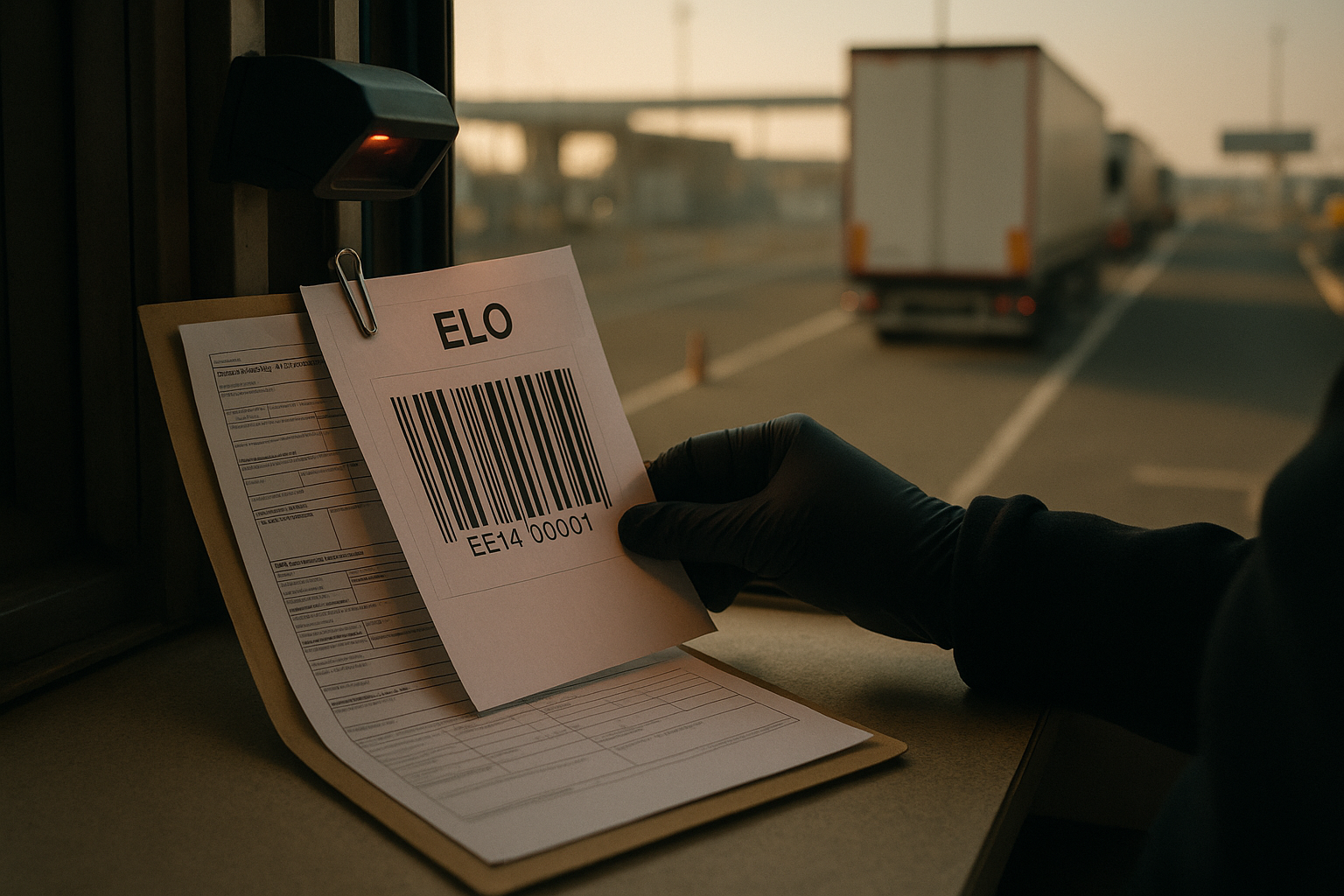
- French Customs says one transport unit needs one ELO, which bundles the relevant border formalities into a single barcode shown at pairing or check-in.
- A missing ELO can lead to boarding refusal by the ferry or shuttle operator, or customs formalities not being processed during the crossing.
- Hauliers need a tighter pre-departure process, because paperwork errors now create an immediate operational risk at check-in rather than a clean-up task after arrival.
What changed on 20 April 2026
From 20 April 2026, French Customs requires an ELO for transport units crossing the Smart Border between France and the UK. According to French Customs, the ELO becomes obligatory for all relevant transport units on that date, and the rule covers Smart Border crossings rather than every EU road freight movement. That distinction matters, because UK operators using ferry and shuttle flows into France now need a specific border envelope process layered on top of their existing customs and safety obligations. If your traffic goes through the France-UK Smart Border, this is no longer optional.
The practical shift is that French border formalities are now expected to be grouped in advance into a single digital envelope. The ELO service produces one barcode linked to the transport unit, and that barcode is presented at pairing or check-in. French Customs describes the tool as a way to aggregate all the border formalities attached to that unit so the crossing can be processed during the journey rather than pieced together afterwards. For operators used to chasing missing references at the port, that changes the control point from the office to the gate.
This is also why the French ELO rule deserves attention beyond compliance teams. It affects dispatch timing, driver instructions, trailer planning, and the hand-off between exporter, forwarder, customs agent, and haulier. A shipment that is customs-ready in theory can still fail operationally if the transport unit has not been wrapped into the correct envelope. If you move accompanied or unaccompanied RoRo freight between the UK and France, you need to treat ELO as a departure-critical task.
What ELO is, and who needs it
ELO stands for Enveloppe Logistique Obligatoire. In plain English, it is a digital logistics envelope created in the French Customs system that groups the formalities attached to a single transport unit. French Customs states that the system is built for RoRo movements using the Smart Border, and that the envelope results in a single barcode presented by the driver or operator. The point is to create one transport-unit level reference rather than relying on multiple disconnected documents at boarding.
The scope is wider than many first assumed. French Customs makes clear that ELO applies to accompanied and unaccompanied transport units in RoRo flows, so the obligation is not limited to a driver physically escorting the load. If you run trailers through Dover-Calais, Folkestone-Coquelles, or similar Smart Border traffic, the requirement can still bite even when the power unit and the cargo move separately. That means trailer operators, groupage planners, and forwarders need to review their handover model, not just their driver briefings.
The simplest operational rule is the French Customs line that one truck equals one ELO. In practice, you should think of it as one transport unit equals one ELO. The envelope does not replace the underlying customs declarations, transit data, or safety filings that may still be required. Instead, it bundles the relevant references so the Smart Border can identify the unit quickly and trigger the right processing logic. If your team already understands customs clearance step by step, the ELO sits above that declaration layer rather than replacing it.
This also means the parties involved must agree who creates the envelope. Some forwarders will do it centrally, some customs intermediaries will handle it, and some larger hauliers will build it into their own planning desk workflow. What matters is that ownership is clear before the unit reaches check-in. If everyone assumes someone else created the envelope, you have a boarding problem, not just an admin problem.
What sits inside the envelope
The ELO is valuable because it works at transport-unit level, but that also creates a discipline problem. You need every relevant border reference ready before the envelope is created. French Customs describes the service as grouping all border formalities linked to the unit, which means the envelope is only as strong as the source data being fed into it. A wrong trailer reference, missing declaration, or stale transit detail can undermine the whole movement.
In operational terms, the envelope should be treated as a final assembly stage. The export or import data may originate from the shipper, a customs broker, a transit office, or your own traffic team, but the ELO is where those streams meet. That is why the change will be felt most sharply by operators carrying mixed loads or groupage traffic. The more parties contributing data to one trailer, the greater the chance that one missing reference blocks the envelope from being built correctly.
The single barcode is the visible output, but the real value is the pre-validation behind it. The barcode allows the ferry or shuttle process to tie the transport unit to its declared formalities during the crossing. French Customs says that if no ELO exists, the unit may be refused boarding or the customs formalities may not be processed during the journey. That means the barcode is not a convenience label. It is now the key that unlocks the Smart Border workflow.
If you already use bill of lading controls and similar core transport documents as internal checkpoints, add ELO assembly after those references are confirmed but before the vehicle or trailer is released to the port. That order matters. Building the envelope too early increases the chance of version-control errors if something changes late in the cycle.
The operational risk if you miss it
The immediate risk is simple, and French Customs has been unusually direct about it. A transport unit without an ELO may be refused boarding by the ferry or shuttle operator. Even if it is allowed to board, the customs formalities might not be processed during the crossing. For a haulier, that can turn a planned same-day movement into a queue, a missed slot, or a costly detention event.
Those failures quickly spread beyond one load. If you run a tight trailer rotation, one unit held back at the border can disrupt the next collection, the next booking, and the driver allocation behind it. If you subcontract linehaul, the cost exposure can be even less predictable because the party facing the delay is not always the party that caused the missing envelope. The result is the kind of dispute that eats margin and damages service levels at the same time.
There is also a customer communication risk. Exporters and importers often assume that if the declaration has been lodged, the unit is border-ready. Under the new French model, that assumption is incomplete. The transport unit must be connected to those formalities through the ELO process, so the status question is no longer just ‘has the customs entry been done?’ but ‘has the unit been enveloped and paired for boarding?’. That extra step needs to appear in your milestone tracking.
For UK operators used to dealing with import security declaration rules as a separate compliance stream, the ELO adds another reason to standardise cut-off times. Border systems work best when data is frozen early enough for validation. If you accept late document changes after the envelope should already be built, you create avoidable exceptions that the port gate will expose immediately.
What hauliers, forwarders, and exporters should do now
The first job is to assign ownership. Decide whether the ELO will be created by the haulier, the customs intermediary, the forwarder, or the principal trader for each traffic model you run. Document that decision by lane and by customer. A vague statement that the office will sort it out is not enough, because the process fails precisely when responsibility is blurred across multiple parties.
Next, build ELO into the pre-departure checklist. Your traffic desk should not release a unit to the port until the envelope has been created, the barcode has been received, and the trailer or vehicle registration has been matched against the booking. That sounds basic, but it is the easiest place to stop preventable failures. Operators who already use a departure gate based on customs broker versus freight forwarder role clarity should add ELO as a formal sign-off point.
You should also segment your flows. Pure full-load accompanied traffic is easier to control than unaccompanied trailers or multi-consignment groupage, so those higher-risk flows deserve tighter cut-offs and escalation rules. If one customer habitually sends document changes just before departure, that lane now carries a direct boarding risk. The answer is not just to chase harder, but to set commercial rules around document readiness and failed cut-off liability.
Finally, brief drivers and port-facing staff on what the barcode is and when they may be asked for it. Drivers do not need to understand every customs field, but they do need to know that the ELO is now a must-have movement reference. A clean driver script reduces the chance that a valid envelope exists somewhere in the office but is unusable at the moment of boarding.
A practical ELO compliance checklist
Before booking
Confirm that the movement actually falls within the France-UK Smart Border process and that the transport model is RoRo rather than a different customs route. Check which party is responsible for creating the envelope for that customer and lane. If the responsibility is outsourced, make sure the service level includes a cut-off time and a named fallback contact. This is the stage where you prevent ownership gaps rather than firefighting them later.
Before unit release
Verify that the customs declarations, transit references, and any other required border formalities for the transport unit are complete and internally consistent. Then create the ELO and confirm the barcode has been issued against the correct vehicle or trailer. A screen showing ‘submitted’ is not enough if the wrong unit reference was used. Your office should only release the unit once the envelope and the booking data match.
At check-in
Make sure the driver or operational contact has immediate access to the barcode and knows what it is for. If the movement is unaccompanied, the terminal-facing staff still need the correct unit-linked reference in the system. Treat any last-minute customer amendment as a controlled exception, because changing source data after the ELO is built may mean the envelope needs to be rebuilt. The gate is the worst place to discover that mismatch.
After disruption
If a unit is refused boarding, capture the root cause straight away. Was the envelope missing, built against the wrong transport unit, or incomplete because source declarations were late? That distinction matters for claims recovery and process repair. Over a few weeks, the pattern will show whether your weak point sits with customer readiness, intermediary response times, or your own dispatch control.
Why this matters for UK-France freight in 2026
The French ELO rule is a good example of how post-Brexit border operations keep becoming more system-driven, not less. The declarations themselves are only one part of compliance. Increasingly, the border also expects those declarations to be assembled, linked, and presented in the right workflow for the specific route being used. Operators that still rely on manual patch-ups at the port will find that model under more pressure in 2026.
For UK hauliers, the bigger lesson is that border readiness must be managed at transport-unit level. The shipment may be commercially ready, the customs entry may exist, and the customer may think the load is cleared, but the movement can still fail if the unit is not wrapped into the correct border envelope. That is especially true on high-frequency short-sea routes where the check-in window is tight and the system is designed to make fast pass-or-fail decisions.
The commercial response is to tighten process design rather than just add more chasing. Set hard cut-offs, define envelope ownership, audit a sample of departures every week, and make failed ELO creation a measurable KPI. If you do that, the new French rule becomes manageable. If you treat it as just another document reference, it will show up as avoidable delay cost.
Frequently Asked Questions
Is French ELO required for every UK-EU shipment?
No. French Customs says the obligation applies to transport units crossing the Smart Border with the United Kingdom. That means the rule is route-specific and tied to the French Smart Border process, not a blanket rule for every EU movement.
Does ELO replace customs declarations?
No. The ELO bundles the relevant border formalities for a transport unit into one barcode workflow, but it does not replace the underlying declarations or other required filings. You should treat it as an organising layer above the core customs data.
Do unaccompanied trailers need an ELO?
Yes, in scope RoRo Smart Border flows. French Customs says the system covers accompanied and unaccompanied transport units, so operators moving trailers without a driver escort still need the envelope process where the route falls within the Smart Border.
What happens if a truck or trailer arrives without an ELO?
French Customs says the unit may be refused boarding by the ferry or shuttle operator. If it does board, the border formalities may not be processed during the crossing, which creates delay and exception handling on arrival.
How many ELOs do you need for one vehicle?
French Customs frames the rule as one truck equals one ELO. In practice, you should manage it as one ELO per transport unit. The envelope may contain several linked formalities, but the visible operational reference is one barcode for that unit.
Where can operators check the official French guidance?
French Customs has published the notice and service guidance on its official site: French Customs ELO guidance. Use that alongside your own carrier and intermediary instructions when building your departure checklist.