Key Takeaways
- The EU’s CBAM downstream extension is still a proposal, not law: procedure 2025/0419(COD) has no adopted Annex I change, so no new 2028 scope is confirmed yet.
- The three institutions are far apart on breadth: roughly 180 product types from the Commission, about 200 from the Council, and an estimated 457 from the Parliament.
- The first political trilogue on 20 October 2026 ended without overall agreement; a second trilogue is reported for 30 November 2026, with institutions targeting a deal before the end of 2026.
- Some finished goods are already covered today, including screws and bolts (CN 7318), steel structures (CN 7308) and other articles of iron, steel or aluminium (CN 7326 and 7616).
- The UK government estimates UK firms face around £800 million in EU CBAM payments by 2030 if no linking or exemption applies, and the UK’s own CBAM starts on 1 January 2027 with a different, value-based threshold.
The EU is negotiating the biggest expansion of its Carbon Border Adjustment Mechanism since its adoption, and UK exporters of steel- and aluminium-intensive finished goods are directly in the firing line.
What the downstream extension actually covers
The core design flaw the extension tries to fix is well known: a carbon levy applied at the raw-material stage leaks away as value moves downstream. A bulk consignment of hot-rolled coil arriving at Rotterdam in 2027 is clearly in scope and carries its embedded-emissions cost; a container of washing machines made in Vietnam from Japanese steel does not, because once the steel leaves the EU’s raw-material scope as a finished appliance, no one traces its embodied emissions. The downstream extension exists to close that gap, and the Commission’s stated fear is that the current design is already pushing EU-bound production of carbon-intensive finished goods to third countries with weaker climate rules.
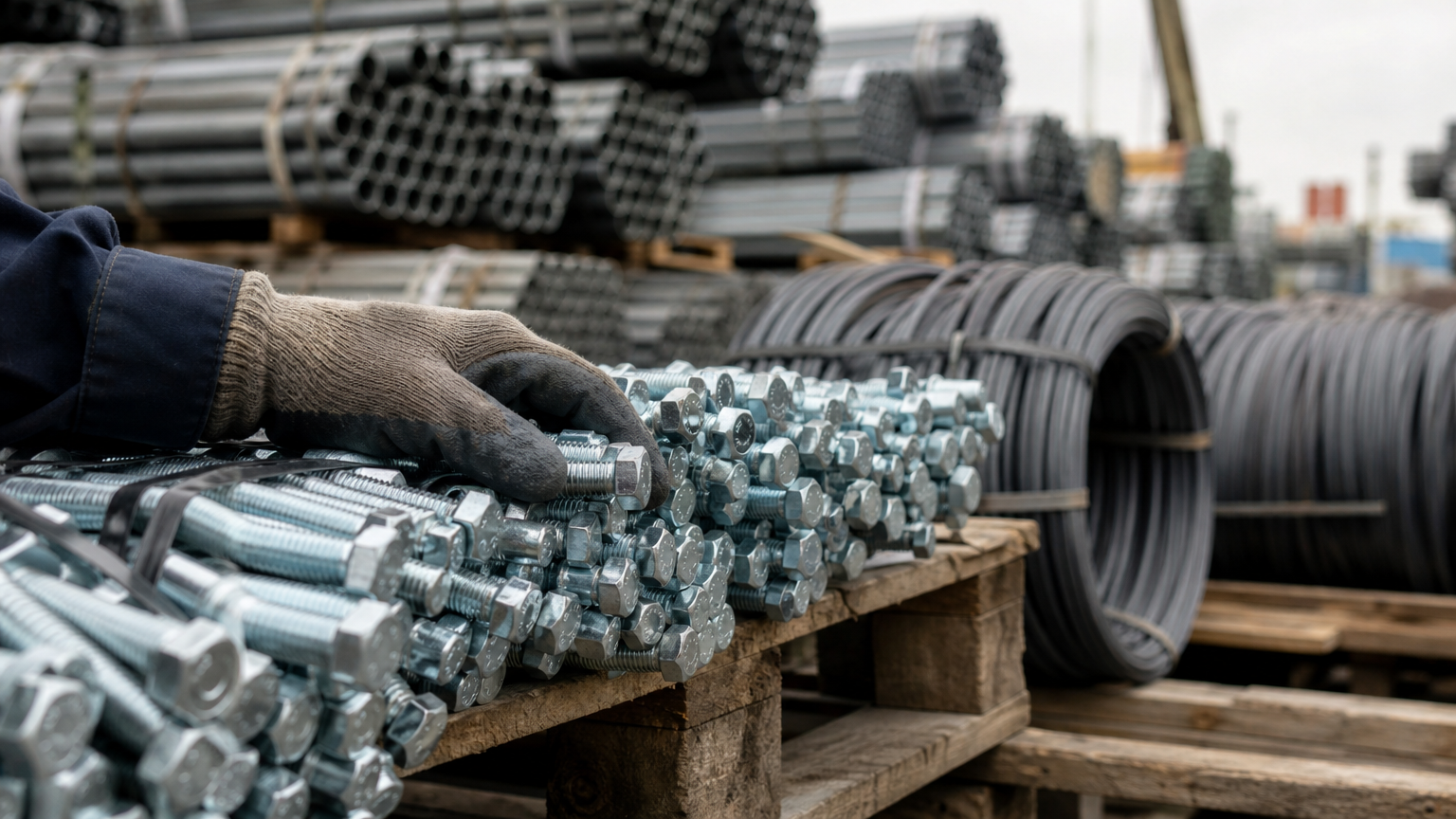
The extension would add a large block of downstream goods to CBAM’s Annex I. The Commission’s proposal COM(2025)989, published on 17 December 2025, would add approximately 180 downstream product types, predominantly steel- and aluminium-intensive goods such as screws, bolts, wire, tubes and metal furniture, according to a Mayer Brown analysis published in October 2026. The Council’s general approach of 12 June 2026 keeps the Commission’s table and adds 202 eight-digit CN codes, taking the list to roughly 200 product types. The European Parliament’s first-reading mandate, adopted on 15 September 2026 by 464 votes to 50 with 159 abstentions, pushes scope far wider still — to an estimated 457 product types, adding machinery, transport parts, transformers and water heaters, and lowering the aluminium mass threshold from 50 tonnes to 5 tonnes.
Two points about those numbers matter for planning. First, the counts are estimates from different sources and must not be added together — Parliament published no official count of its own list. Second, whichever list emerges, the practical work for exporters is the same: screen your EU-bound CN codes against the eventual list, and know the classification of every finished product today. Classification workflow tools such as TariffFlow, which keeps signed classification records, matter here because most exporters cannot currently state the eight-digit code for every SKU they ship into the EU.
It is also worth being precise about what is already in scope. Per CBAM Guide, Annex I of Regulation (EU) 2023/956 already reaches some finished goods today: CN 7318 (screws, bolts and similar fasteners), CN 7308 (structures and parts of structures), CN 7326 (other articles of iron or steel) and CN 7616 (other articles of aluminium). UK fastener and structural-steel exporters have therefore already been inside EU CBAM’s definitive phase — compliance began on 1 January 2026 with a 50-tonne annual mass threshold — rather than waiting for any extension.
Where the three institutions stand
| Issue | Commission | Council | Parliament |
|---|---|---|---|
| Product scope | ~180 product types | ~200 product types (adds 202 CN codes) | ~457 product types (estimate) |
| Aluminium de minimis | 50 tonnes | 50 tonnes | 5 tonnes |
| Scrap treatment | Pre-consumer scrap as precursor | Pre-consumer scrap as precursor | All aluminium scrap, incl. post-consumer, as precursor + single default for unwrought aluminium |
| Article 27a escape valve | Temporary removal from scope | Reworked: exemption after sustained >50% price rise over six months, one calendar year, max two | Deleted; CBAM revenue redirected to affected sectors |
| Anti-circumvention | New “abusive practices” definition | Adds “harmful resource shuffling” rules for high-risk goods | Extends to slight modification or slight processing |
The table shows the negotiating gap; three rows deserve unpacking. The aluminium de minimis threshold is the most commercially sensitive: at 5 tonnes per year, thousands of small EU importers of aluminium-containing goods would enter scope, which is why it went to technical work. The scrap row matters for circular-economy exporters, because whether post-consumer scrap counts as a zero-carbon precursor changes the emissions maths CBAM charges on. Article 27a is the political safety valve — the Commission wanted to remove goods from scope temporarily on price spikes, the Council conditioned that on a sustained 50% price rise over six months capped at two calendar years, and Parliament replaced it with revenue redirection. Sellers into the EU should model certificate costs in a price-shock year.
The anti-circumvention row may matter more to UK supply chains than the product lists. The Commission introduces an “abusive practices” definition; the Council adds “harmful resource shuffling” rules for high-risk goods and origins; and Parliament extends circumvention to slight modification or processing that moves goods out of scope. Per Mayer Brown, all bind only on adoption of the extension.
What happened on 20 October and what comes next
The first political trilogue took place on 20 October 2026 and ended without overall agreement, according to CBAM Guide’s tracking of press reporting. Four issues went to technical work: the aluminium de minimis threshold, metal scrap, online platforms in the compliance chain, and the global default values used where actual installation-level emissions data is not supplied. No institutional readout was published, so treat any detailed “agreed text” claims in trade press with care.
The next formal step is a second political trilogue reported — not officially confirmed — for 30 November 2026. The institutions remain committed to agreement before end-2026 so the extension could apply from 1 January 2028, but even after a political deal, final adoption, default-value guidance and registry changes must follow. A slipped trilogue could push application back, yet UK suppliers should not bet compliance planning on slippage.
Meanwhile, the existing EU CBAM definitive phase rolls forward: certificate sales start on 1 February 2027, and the first declaration and surrender for 2026 imports falls due on 30 September 2027, per CarbonMeld citing ICAP. Those deadlines bind regardless of the trilogue outcome, and they hit importers of already-covered goods first.
Why this matters to UK suppliers specifically
UK exporters are not bystanders in this file for three reasons.
First, the EU CBAM already charges on UK-origin goods entering the EU. The UK was the EU’s largest steel export destination in 2025 and holds a 20% share of EU steel exports, per EUROMETAL, while UK output slipped to 2.50 million tonnes in 2025. Every tonne of that flow now carries EU CBAM reporting obligations at the 50-tonne annual threshold, with certificate costs payable from February 2027.
Second, real money is at stake if the regimes fail to connect: the UK government estimates UK firms face around £800 million in EU CBAM payments by 2030 if no linking or exemption applies — an estimate, not a measured outturn. Whether the UK-EU ETS linkage work lands before the extension is adopted determines whether thousands of UK exporters face stacked carbon levies on both borders; our state-of-play piece on the EU ETS linkage position tracks that file.
Third, the UK’s own CBAM arrives first, and it behaves differently. Under the Finance Act 2026, UK CBAM starts on 1 January 2027 across five sectors — aluminium, cement, fertiliser, hydrogen, and iron and steel — with a £50,000 registration threshold measured on the value of CBAM goods, not their mass. GOV.UK’s policy summary confirms that the liable person is the importer named on the customs declaration, even when a forwarder or broker files, and that aluminium and steel scrap are excluded from UK scope. A UK exporter into the EU is governed by EU rules; a UK importer of CBAM goods is governed by UK rules; a firm doing both maintains two regimes with different thresholds, liable parties and data requirements. Our UK CBAM 2027 guide sets out the registration and data-collection steps on the UK side, and UK carbon border explainer covers the regime’s structure.
One trap deserves flagging: holding UK CBAM registration does not exempt UK exporters from EU CBAM. The two regimes apply to goods entering the respective customs territories, full stop — no mutual recognition unless the ETS linkage work changes the mechanics.
The anti-circumvention rules that will catch supply-chain restructuring
The package’s anti-circumvention provisions deserve their own attention from anyone designing routes into the EU, because they deliberately target the avoidance strategies the current CBAM design invites.
The Commission’s “abusive practices” definition creates a general enforcement basis, but the Council’s “resource shuffling” rules are the more operationally significant addition: for high-risk goods and origins, importers will face challenge where resource allocation between installations is arranged to artificially lower the emissions charged — for instance, routing a product line through the installation with the lowest declared intensity while the group’s other installations carry the true costs. Parliament extends circumvention to “slight modification or slight processing” that moves goods out of scope: regrinding a coil or re-bundling fasteners to shift a product out of an in-scope CN code will not work if its purpose is evasion rather than genuine transformation.
The default-value question ties into this. Where importers cannot evidence actual installation-level emissions, CBAM applies default values — historically set conservatively high — creating an incentive to reposition sourcing around favourable defaults. Parliament favours a single default for all unwrought aluminium, which would neuter that arbitrage, and defaults are one of the four issues in technical work, suggesting the final package changes how they are calculated. Any procurement structure optimised for today’s defaults risks being caught by the anti-circumvention rules or invalidated by the new values.
What to do before 30 November
None of this is actionable if it is filed as “watch the trilogue”. Four concrete steps are worth taking now, none of which requires the final text.
Screen EU-bound finished goods against the three lists. Pull the CN codes you currently ship into the EU and test them against the Commission’s roughly 180 product types, the Council’s about 200, and the Parliament’s estimated 457. This is classification work, not policy work, so start immediately: if all three positions cover your products, you are in scope on any outcome and can open emissions-data conversations with upstream suppliers now. If only the Parliament’s list covers you, scope risk is real but conditional. A classification workflow that keeps signed case records — HMRC’s Binding Tariff Information route (our BTI guide), the shortcuts in our commodity code classification tips, or a tool such as TariffFlow — pays off because the defence against a future CBAM challenge is the documented, reasoned classification, not the code alone.
Get emissions data readiness moving upstream. Even covered fasteners and structures require embedded-emissions figures today, and the extension multiplies the installations whose data you need. If suppliers cannot produce installation-level data, you default — expensively. Ask your mills and foundries now what they can evidence, and record responses.
Put CBAM cost pass-through into contract terms. Between now and 2028, EU customers will start asking UK suppliers to absorb or share certificate costs. Supply agreements drafted before the extension rarely allocate a charge that did not exist when signed, and our DDP vs DAP guide shows how delivery terms shift who carries compliance costs. Review renewal dates, price-review clauses and force-majeure language against certificate costs applying from 2027.
Do not restructure supply chains for default-value advantage. The anti-circumvention rules in all three positions target schemes built around default values, and the defaults are themselves under revision. Any restructure based on today’s rules risks being worthless — or costly — once the final package lands.
For UK exporters, the practical message is simple: every plausible outcome includes downstream coverage, and every plausible timeline — even with slippage — puts compliance obligations into the late-2020s. Classification, supplier emissions data and contract terms are valuable in every scenario, and the export-readiness checklist in how to export from the UK covers the groundwork those steps sit on. That is the work to start now.
Frequently Asked Questions
Is the 2028 application date confirmed?
No. The 1 January 2028 date is the institutions’ target contingent on political agreement, which has not been reached. COM(2025)989 is still in trilogue as of early November 2026, and no Annex I amendment has been adopted. Until the file is adopted and published, no product outside today’s scope has any CBAM obligation.
Does holding UK CBAM registration exempt me from EU CBAM?
No, not currently. EU CBAM applies to goods entering the EU customs territory; UK CBAM applies to goods entering the UK — separate regimes, separate liabilities, separate thresholds. Any exemption pathway would have to come from the UK-EU ETS linkage work, which is incomplete and has no confirmed CBAM mechanism.
Are UK fastener and structural steel exports already covered?
Yes, where they exceed the EU’s 50-tonne annual mass threshold. CN 7318 (screws and bolts), CN 7308 (structures and parts), CN 7326 (other articles of iron or steel) and CN 7616 (other articles of aluminium) are already inside Annex I of Regulation (EU) 2023/956. Reporters should already be filing; certificate sales begin 1 February 2027.
What if I only export finished goods and no raw materials?
That is precisely the gap the extension targets. Today, many finished steel and aluminium goods fall outside EU CBAM because embedded carbon is not traced past the raw-material stage. All three institutional versions would pull a significant block of those finished goods into scope from the application date, so screening your EU-bound CN codes against the three lists is the right immediate action.
When is the first EU CBAM certificate surrender deadline?
30 September 2027, covering 2026 imports, per CarbonMeld citing ICAP. Certificate sales begin on 1 February 2027, making the first surrender the first hard payment deadline for imports under the current regime.
Should I wait for the second trilogue before doing anything?
No. The second trilogue, reported for 30 November 2026, will not settle technical guidance on default values or installation-level data. Classification screening, supplier emissions data requests and contract-terms review are useful in every plausible scenario, and they take months, not days. Waiting forfeits the runway, not the risk.