Key Takeaways
- The UK will remove customs duty relief for low value imports from 1 October 2028, according to the Treasury announcement published by GOV.UK on 23 June 2026.
- The change brings the timetable forward from 1 March 2029, the date announced at Budget 2025 on 26 November 2025, according to GOV.UK.
- Goods valued at £135 or less will become liable for customs duty at UK Global Tariff rates, according to GOV.UK, but VAT treatment is not changing.
- GOV.UK says around 600 million low value consignments used BIRDS in 2024, equal to roughly 1.6 million parcels per day.
- The current BIRDS process will be replaced by a new low value import system, separate from CDS, with item-level data requirements and liability moving towards sellers and online marketplaces.
- The Treasury estimates the reform will raise £600 million a year in customs duty, according to GOV.UK.
The Answer: Duty Relief Ends on 1 October 2028
The UK’s low value import duty relief is now due to end on 1 October 2028, according to the Treasury announcement published by GOV.UK on 23 June 2026. That is the practical headline for importers, parcel operators, marketplaces, customs brokers and UK retailers. The previous implementation date was 1 March 2029, announced at Budget 2025 on 26 November 2025, according to GOV.UK. The accelerated timetable gives industry less time to redesign data flows, checkout processes, carrier instructions and customs governance.
The affected threshold is the familiar £135 low value import limit, which GOV.UK says currently allows goods valued at £135 or less to enter without customs duty. From 1 October 2028, GOV.UK says those goods will become subject to customs import duties at UK Global Tariff rates. That does not mean every parcel under £135 will face the same duty charge, because duty rates depend on commodity code, origin, product type and any preferential treatment. If you are unsure how duty rates are set, the practical starting point is the UK import duty complete guide and a clean classification process using the commodity code classification guide.
VAT is not the moving part here. Since the e-commerce reforms introduced in 2021, VATCalc and HMRC guidance say VAT on many low value imports has been collected at the point of sale rather than at the border. The new Treasury measure is about customs duty relief, not a rewrite of the import VAT model. For finance and compliance teams, that matters because you need to separate VAT accounting, duty liability and customs declaration data rather than treating this as one general border-tax change. For more on how import VAT works under the current system, see the import VAT and postponed accounting guide.
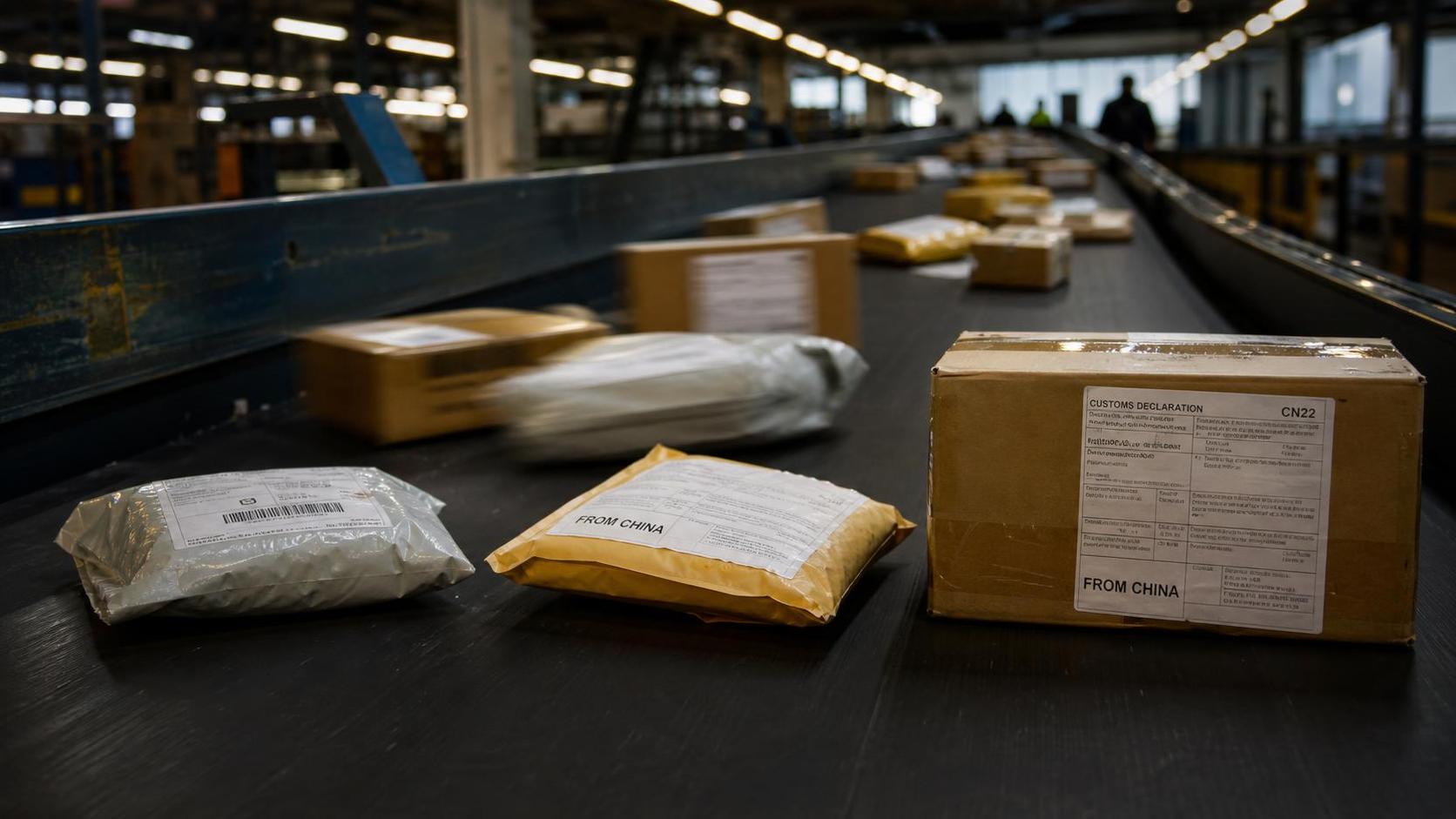
The reason this change matters is volume. GOV.UK says around 600 million low value consignments were imported using BIRDS in 2024, or about 1.6 million consignments per day. GOV.UK also says BIRDS consignments tripled between 2021 and the year ending June 2024. Trade value through BIRDS rose from £3.8 billion in 2023-24 to £5.9 billion in 2024-25, a rise of more than 50% in one year, according to GOV.UK. That scale means the reform is not a niche customs update; it changes the operating model for a large share of consumer e-commerce imports.
What Is Actually Changing for Low Value Imports
The current relief means goods at or below £135 can avoid customs duty, according to GOV.UK, even though VAT is already dealt with under the post-2021 e-commerce rules described by VATCalc and HMRC. The reform removes that duty relief, so customs duty becomes chargeable where the UK Global Tariff applies. You should expect commodity code accuracy to matter more for small parcels than it does today. If your business has treated low value parcels as a simplified fulfilment flow, that assumption needs to be retired before 1 October 2028, the date confirmed by GOV.UK.
The £135 line is not disappearing. GOV.UK says the threshold is being repurposed as the dividing line between the new low value import system below the threshold and standard CDS declarations above it. That is a critical distinction, because many headlines will describe this as the end of the £135 threshold, which is too loose. The commercial relief is being removed, but the operational boundary remains. If you handle standard import entries above the threshold, the customs declaration process guide and the CDS guide remain relevant references.
BIRDS, the Bulk Import Reduced Data Set, is also being replaced. GOV.UK says the replacement will be a purpose-built low value import system, separate from CDS. That means businesses should not assume this will simply be a minor CDS field change or a new declaration category inside the existing process. The new LVI model will need its own workflow and controls, and operators who have built integrations around BIRDS will need to plan a transition rather than an upgrade.
The new system will require item-level data, including goods description, value, weight, consignor and consignee, according to GOV.UK. That is a major change for high-volume parcel flows where upstream data can be incomplete, inconsistent or optimised for sales rather than customs. Generic product descriptions, poor weight data and missing seller details will become operational blockers rather than back-office irritations. You should start treating checkout data, product master data and customs classification as the same compliance chain.
Why the Treasury Has Accelerated the Timetable
The Treasury’s stated driver is the rapid growth of low value e-commerce imports. GOV.UK says around 600 million low value consignments came through BIRDS in 2024, and that BIRDS consignments tripled between 2021 and the year ending June 2024. GOV.UK also reports that trade value through BIRDS increased from £3.8 billion in 2023-24 to £5.9 billion in 2024-25, which is a rise of more than 50% in one year. Those figures show why ministers have moved the date forward from 1 March 2029 to 1 October 2028, according to GOV.UK.
The revenue number is significant but not the whole story. GOV.UK says the reform is expected to raise £600 million per year in customs duty. That is a material Exchequer estimate, but the policy also responds to complaints from UK retailers about competitive imbalance. The British Retail Consortium said the accelerated date “does not go far enough”, according to the BRC response reported by Sky News and City AM after the Treasury announcement.
The political target is clear: overseas e-commerce platforms such as Shein, Temu and similar sellers using direct-to-consumer parcel flows. GOV.UK’s announcement was made by Dan Tomlinson, Exchequer Secretary to the Treasury, and the consultation is focused on the design of new arrangements. Retailers supporting reform through the BRC include Primark, M&S, Next, Sainsbury’s and Superdrug, according to the BRC response. Their argument is straightforward: UK-based retailers already carry domestic compliance, labour and tax costs, while some overseas models have benefited from low value duty relief at scale.
For logistics operators, the fairness debate is secondary to execution. The real question is whether sellers, marketplaces, parcel carriers and customs intermediaries can provide enough accurate item-level data to calculate duty without slowing parcel movement. If the answer is no, the impact will be felt in clearance delays, customer queries, held freight and manual exception handling. Express parcel operators should read this alongside the express courier customs clearance guide, because the pressure point will be high-volume data quality rather than traditional freight paperwork.
How the UK Compares with the EU and US
The UK is not acting alone. The EU removed its €150 de minimis threshold on 1 July 2026, according to the EU Commission. The EU replaced it with a temporary €3 customs duty per item until 1 July 2028, according to the EU Commission, with a €2 handling fee due from November 2026. That is a different design from the UK’s approach.
The UK has rejected the EU’s interim flat levy model. GOV.UK and sector reporting from Fn Customs say there are no current UK plans for a €3-style fixed customs levy. Instead, the UK intends to apply customs duty at UK Global Tariff rates to goods valued at £135 or less, according to GOV.UK. That is more complex operationally, because it depends on classification and duty rate rather than a flat charge.
The United States has moved faster and harder. The US scrapped its $800 de minimis treatment for Chinese imports in May 2025, according to international customs reporting cited by VATCalc. It then extended the removal to all countries in August 2025, according to the same reporting. Compared with that, the UK’s 1 October 2028 date, confirmed by GOV.UK, still gives businesses a long runway — but the direction of travel is the same across all three major markets.
For UK logistics teams, the comparison matters because cross-border platforms will need country-specific rule engines. EU, US and UK low value import rules are now diverging in dates, thresholds, charging models and data requirements. A seller shipping the same item to London, Paris and New York cannot assume one global checkout treatment will work. If you handle international e-commerce, this is the time to map duty logic by destination market, not just by carrier lane. The EU-UK VAT e-commerce IOSS guide covers the EU-side VAT changes that interact with these duty reforms.
Practical Actions Before October 2028
Start with product data. By 1 October 2028, the date confirmed by GOV.UK, sellers and marketplaces will need reliable goods descriptions, values, weights, consignor details and consignee details for low value imports. If your current product catalogue cannot support customs-grade descriptions, fix that before you redesign the transport process. Poor data will be the root cause of most clearance pain.
Next, review duty classification for high-volume SKUs. The £135 relief has allowed many low value imports to avoid customs duty, according to GOV.UK, which means classification may not have been commercially visible. Once duty applies at UK Global Tariff rates, according to GOV.UK, classification errors become cost errors. Use the UK customs tariff changes April 2026 update to check whether recent tariff movements affect your product range.
Then test the customer journey. VAT has been collected at point of sale for many low value imports since the 2021 reforms, according to VATCalc and HMRC guidance, but duty will add another landed-cost component. Customers will not care whether the charge is VAT, duty or a handling fee if the checkout message is unclear. Your web copy, invoice structure and customer service scripts need to explain what is included and what is not.
Finally, speak to carriers and brokers early. GOV.UK says the new system will connect into GVMS at RoRo ports and airport inventory systems, so this is not only a seller-side tax issue. Carriers will need clean pre-arrival data and agreed exception processes. If you rely on parcel operators, ask what data schema they will require, how they will validate item-level records and how rejected consignments will be handled.
Frequently Asked Questions
When is the UK removing low value import duty relief? The UK is removing customs duty relief for low value imports on 1 October 2028, according to the Treasury announcement published by GOV.UK on 23 June 2026. The previous date was 1 March 2029, announced at Budget 2025 on 26 November 2025, according to GOV.UK.
Is the £135 threshold being abolished? No. GOV.UK says the £135 threshold is being repurposed as the line between the new low value import system and standard CDS declarations. Goods valued at £135 or less will become liable for customs duty at UK Global Tariff rates, according to GOV.UK.
Is import VAT changing? No. VATCalc and HMRC guidance say VAT has already been collected at point of sale for many low value imports since the 2021 e-commerce reforms. The 1 October 2028 change confirmed by GOV.UK is about customs duty relief, not a new VAT model.
What is replacing BIRDS? GOV.UK says BIRDS will be replaced by a purpose-built low value import system, separate from CDS. The new system will require item-level data such as goods description, value, weight, consignor and consignee, according to GOV.UK.
Will the UK copy the EU’s flat fee model? No. The EU removed its €150 de minimis threshold on 1 July 2026 and introduced a temporary €3 duty per item until 1 July 2028, according to the EU Commission, but GOV.UK and Fn Customs reporting say the UK has no plan for a similar fixed levy. The UK approach is to apply UK Global Tariff duty rates to goods valued at £135 or less, according to GOV.UK.